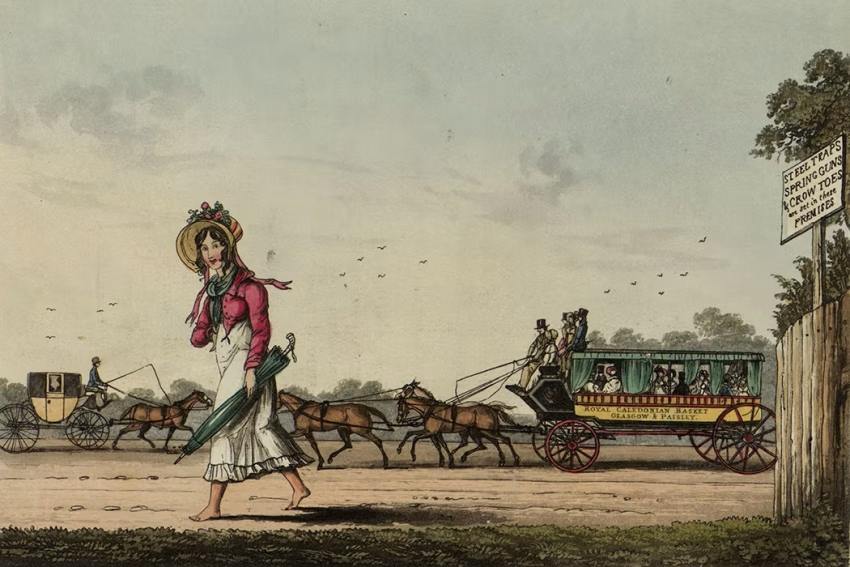
Travel in colonial America was slow, difficult, and often dangerous. Unlike today, there were no paved highways, railroads, or reliable public transportation systems. Most people traveled on foot, by horseback, or by simple carriages and wagons. Roads were typically narrow dirt paths that became muddy, rutted, or impassable during bad weather. Even short journeys required careful planning, and long-distance travel could take weeks or longer.
For many colonists, travel was a rare necessity rather than a routine activity. Families usually lived, worked, and traded close to home. When travel was required—for business, legal matters, or family emergencies—it involved physical risk and discomfort. Travelers faced rough terrain, limited lodging, and the possibility of illness or injury far from help.
Waterways played a crucial role in transportation. Rivers, lakes, and coastal waters offered faster and more reliable routes than roads. Boats and ships moved goods, people, and information between colonies and across the Atlantic. As a result, ports became vital economic and social centers, linking colonial towns to global trade networks. Coastal shipping connected colonies to one another more efficiently than overland travel.
Poor road conditions affected communication and trade. News traveled slowly, and misunderstandings were common. This reinforced the importance of local communities, where information could be shared directly through conversation, town meetings, and printed materials. It also meant that coordination between colonies required patience and determination.
Transportation challenges played an important role during the American Revolution. Moving troops, supplies, and weapons was difficult, and armies had to adapt to the terrain. Colonists often had an advantage because they knew local roads, river crossings, and shortcuts. British forces, unfamiliar with the landscape, sometimes struggled to move efficiently. Control of rivers, ports, and key routes became a strategic priority.
Despite these limitations, colonists traveled when necessary. Riders carried messages between towns, merchants transported goods, and leaders journeyed to meetings and congresses. These efforts allowed news, ideas, and resistance to spread across great distances, even under difficult conditions.
Colonial transportation reminds us that determination and adaptability supported the path to independence. Overcoming physical barriers required cooperation, resilience, and persistence—qualities that mirrored the larger struggle for freedom itself.