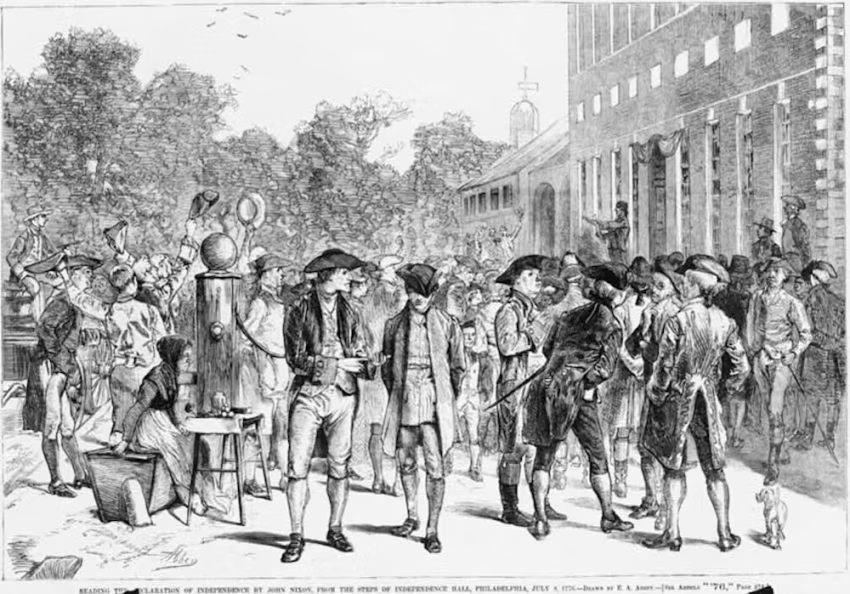
Taverns were among the most important social spaces in colonial America. Far from being merely places to eat and drink, taverns served as informal meeting halls where people gathered to exchange news, conduct business, and debate ideas. In many towns, taverns were the most accessible public spaces available, welcoming travelers, merchants, farmers, and local leaders…
Colonial Farming & Food
Farming was the backbone of colonial America, shaping daily life, family structure, and community survival. Most families relied directly on the land, growing crops and raising animals to meet their needs throughout the year. Even those who lived in towns often maintained small gardens or livestock, as access to fresh food was essential and markets…
The Role of Civic Virtue in a Free Society
From the very beginning of the American experiment, the founders believed that freedom depended on more than laws and institutions. It depended on civic virtue—the habits, character, and conduct of the people themselves. A free society, they argued, could not survive on rules alone. It required citizens willing to exercise self-restraint, responsibility, and concern for…
Colonial Town Life
Colonial towns were the center of social, economic, and political life in 1776. Though small by modern standards, these towns were busy hubs where people gathered to trade goods, worship, share news, and debate ideas. For many colonists, town life shaped daily routines and personal identity, creating strong local connections that influenced how people thought…
Why 1776 Still Shapes American Life Today
The events of 1776 are often remembered as distant history—powdered wigs, parchment documents, and revolutionary speeches. Yet the ideas expressed that year continue to shape American life in ways that are practical, visible, and deeply personal. From the rights we exercise to the institutions we rely on, the principles articulated in 1776 are woven into…
What Is Liberty? Then vs. Now
Liberty was the heart of the American Revolution, but its meaning in 1776 was shaped by the world colonists lived in and the challenges they faced. At its core, liberty meant freedom from arbitrary power. Colonists believed that no ruler should govern without consent and that laws should be fair, predictable, and created by representatives…
What the Founders Got Right—and What They Knew Would Change
The American founders are often portrayed in extremes—either as flawless visionaries who solved every problem or as deeply flawed figures whose work should be discarded. The truth lies between these views. What makes the American founding remarkable is not that the founders believed they were perfect, but that they designed a system that assumed imperfection—both…
Creative Writing for Kids Without Pressure
Make creative writing fun, not stressful! Pressure-free prompts and activities help kids express ideas, boost vocabulary, and enjoy storytelling—no rules, just pure imagination.
Why Story Starters Are Better Than Screens Before Bed
Screens disrupt kids’ sleep with blue light—try story starters instead! These fun prompts spark creativity, calm minds, and create magical bedtime moments without digital distractions.
How to Build a Bedtime Reading Routine That Kids Love
Transform bedtime battles into joy! Build a fun, consistent bedtime reading routine with interactive tips, cozy setups, and enchanting stories your children will beg for every night.