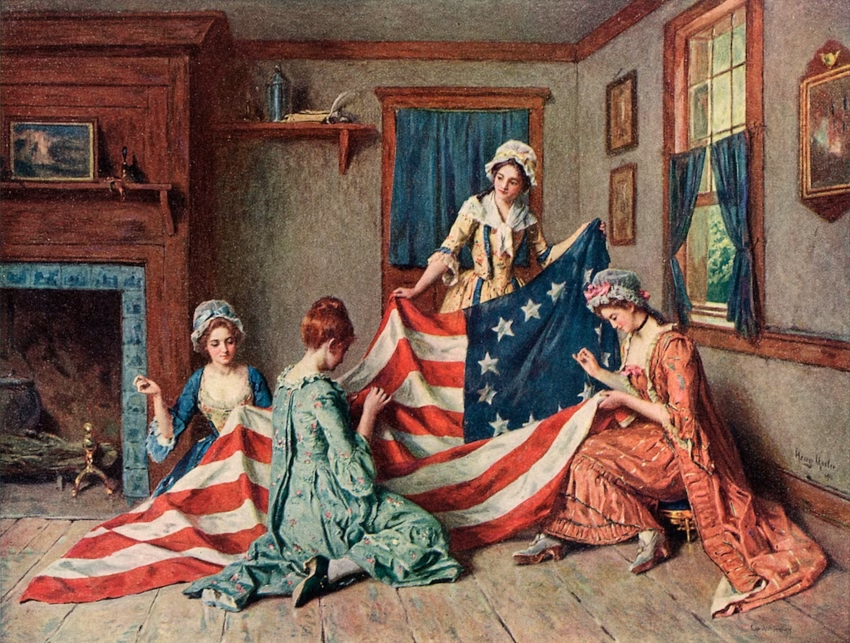
Before the American Revolution, most colonists identified strongly with their individual colonies rather than with a shared national identity. People described themselves as Virginians, New Yorkers, or Pennsylvanians, and loyalty was primarily local. Each colony had its own government, economy, customs, and religious traditions. The idea of being “American” had little meaning at first. This…
The Intolerable Acts
Following the Boston Tea Party, Britain responded with a series of harsh laws intended to punish Massachusetts and restore order. Known to colonists as the Intolerable Acts, these measures closed Boston Harbor, altered local government, and limited colonial self-rule. British leaders believed firm action would discourage further resistance. Instead, the Intolerable Acts had the opposite…
The Townshend Acts
Just a few years after repealing the Stamp Act, Britain introduced a new set of taxes known as the Townshend Acts. These laws placed duties on imported goods such as glass, paper, paint, lead, and tea. British officials hoped these taxes would be less controversial, as they targeted imports rather than direct transactions. Instead, they…
The Stamp Act
The Stamp Act of 1765 marked a turning point in the relationship between Great Britain and the American colonies. For the first time, Parliament imposed a direct tax on the colonies, requiring official stamps on newspapers, legal documents, licenses, and even playing cards. To British leaders, the tax seemed reasonable. Britain had spent heavily defending…
Colonial Currency & Trade
Trade connected the American colonies to the wider world, but British control over commerce created growing tension long before independence was declared. Under mercantilist policies, the colonies were expected to exist primarily for the economic benefit of Great Britain. Raw materials flowed outward, while finished goods flowed back in, limiting colonial opportunity and independence. Colonial…
The Role of Taverns in the Revolution
Taverns were among the most important social spaces in colonial America. Far from being merely places to eat and drink, taverns served as informal meeting halls where people gathered to exchange news, conduct business, and debate ideas. In many towns, taverns were the most accessible public spaces available, welcoming travelers, merchants, farmers, and local leaders…
Colonial Farming & Food
Farming was the backbone of colonial America, shaping daily life, family structure, and community survival. Most families relied directly on the land, growing crops and raising animals to meet their needs throughout the year. Even those who lived in towns often maintained small gardens or livestock, as access to fresh food was essential and markets…
The Role of Civic Virtue in a Free Society
From the very beginning of the American experiment, the founders believed that freedom depended on more than laws and institutions. It depended on civic virtue—the habits, character, and conduct of the people themselves. A free society, they argued, could not survive on rules alone. It required citizens willing to exercise self-restraint, responsibility, and concern for…
Colonial Town Life
Colonial towns were the center of social, economic, and political life in 1776. Though small by modern standards, these towns were busy hubs where people gathered to trade goods, worship, share news, and debate ideas. For many colonists, town life shaped daily routines and personal identity, creating strong local connections that influenced how people thought…
Why 1776 Still Shapes American Life Today
The events of 1776 are often remembered as distant history—powdered wigs, parchment documents, and revolutionary speeches. Yet the ideas expressed that year continue to shape American life in ways that are practical, visible, and deeply personal. From the rights we exercise to the institutions we rely on, the principles articulated in 1776 are woven into…