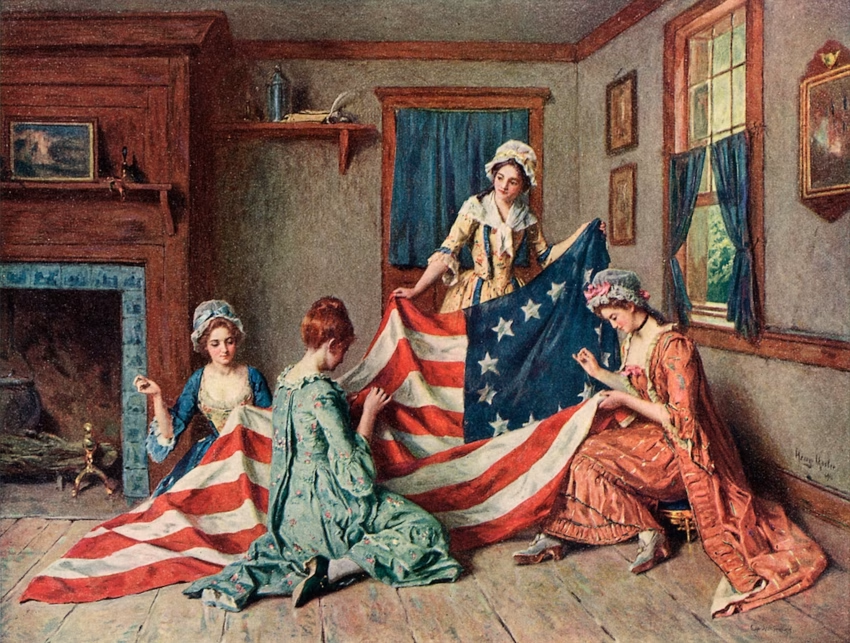
Early American flags varied widely in design, but their purpose was remarkably consistent: they helped scattered colonies see themselves as part of a shared cause. In an era when most people still identified first as Virginians, New Yorkers, or Massachusetts residents, a flag offered something visible and immediate—a symbol that could be recognized across distance, dialect, and local custom.
One of the clearest examples is the Grand Union Flag (also called the Continental Union or Cambridge flag). It combined thirteen red-and-white stripes with the British Union flag in the corner. That design captured the uncertainty of the early war years: the stripes signaled colonial unity, while the British symbol hinted that some still hoped for reconciliation or at least wanted to present their resistance as lawful rather than purely revolutionary. Accounts associate its early display with Washington’s army on January 1, 1776, making it a powerful “in-between” banner—unity forming, independence not yet fully declared. Encyclopedia Britannica
Other early flags carried sharper messages. The rattlesnake became a popular symbol of American resistance, building on revolutionary-era imagery and warnings that the colonies would defend themselves if threatened. The Gadsden flag, designed by Christopher Gadsden in 1775, paired a coiled rattlesnake with the blunt message “DON’T TREAD ON ME,” communicating vigilance and defiance. Encyclopedia Britannica These flags were especially meaningful in military and naval settings, where identifying friend from foe mattered—and where morale could hinge on shared symbols.
Not every famous “first flag” story is equally documented, and that’s part of what makes early flags so interesting. The popular tale that Betsy Ross sewed the first U.S. flag is widely treated by historians as a legend with limited contemporary evidence, even though it became a powerful national story later. National Postal Museum+1 That contrast—between documented banners used in war and later traditions that grew up around them—shows how symbols accumulate meaning over time.
Practically, flags served as signals: rallying points on a battlefield, identifiers on ships, and visual markers for camps and public events. Symbolically, they helped transform political ideals into something people could see and stand under. Over time, these banners did more than represent resistance—they helped create identity. The colonies were learning to think like one people, and early flags helped make that unity visible.