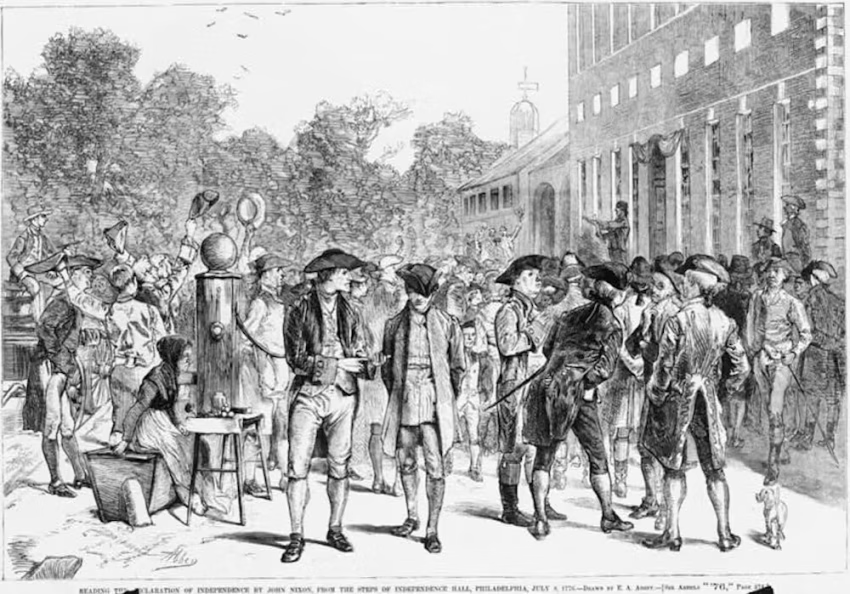
Community resilience was one of the most important yet least celebrated forces sustaining the American Revolution. While armies fought on battlefields, towns and neighborhoods carried the daily burden of war. Original source documents—letters, diaries, town meeting records, petitions, sermons, and official correspondence—reveal that independence would not have been possible without communities adapting, cooperating, and enduring together.
Colonial communities faced constant disruption. Armies passed through towns, requisitioning food and supplies. Trade networks collapsed, inflation soared, and families were separated for years. Yet town records show that local governments responded quickly. Town meetings organized food distribution, cared for widows and orphans, and coordinated defenses. These meetings reinforced habits of self-government and collective responsibility that predated independence but became essential during war.
Mutual aid was a cornerstone of resilience. Diaries and letters describe neighbors sharing crops, tools, and labor when shortages struck. When illness spread, communities organized care for the sick. Church records document collections taken for families of soldiers, refugees, and the poor. These efforts were not directed by distant authorities—they were local responses to immediate need.
Women played a central role in sustaining community life. Household journals and correspondence show women managing farms, shops, and finances while also participating in communal labor. Sewing circles produced clothing for soldiers, while shared kitchens and childcare helped families survive with limited resources. These networks transformed private hardship into collective strength.
Religious institutions strengthened resilience as well. Sermons addressed fear, loss, and fatigue directly, encouraging patience and unity. Ministers framed cooperation and charity as moral duties, reinforcing the idea that communities had an obligation to one another during crisis. Church gatherings provided emotional stability when political and economic systems were strained.
Community resilience also involved difficult choices. Town petitions reveal debates over taxation, supply requisitions, and loyalty. Disagreements were common, especially in areas divided between Patriots and Loyalists. Yet even amid conflict, communities continued to function. Courts met, roads were maintained, and schools sometimes operated intermittently. The continuation of civic life under stress was itself an act of resistance.
Leaders recognized the importance of community stability. George Washington repeatedly warned officers that mistreatment of civilians would undermine the revolutionary cause. His orders emphasized protecting local populations, acknowledging that the army depended on civilian cooperation for survival. Correspondence between military and civilian leaders reflects constant negotiation between military necessity and community well-being.
Resilience also appeared in adaptation. Communities adjusted planting schedules, altered trade practices, and developed local manufacturing to compensate for shortages. Account books and letters document increased home production of goods once imported. This adaptability reduced dependence on unstable supply lines and strengthened local self-sufficiency.
Perhaps most telling are personal diaries that describe exhaustion alongside determination. Writers acknowledged fear, hunger, and grief, yet also recorded moments of solidarity—neighbors rebuilding after destruction, sharing news, or simply surviving another season. These small victories sustained morale when larger outcomes remained uncertain.
Community resilience during the American Revolution reminds us that independence was not achieved by individuals acting alone. It was built collectively, through shared sacrifice and cooperation at the local level. Towns became anchors of stability in an unstable world.
Understanding this resilience helps us see the Revolution not only as a political or military struggle, but as a social one. Communities endured because they worked together—balancing disagreement with duty, fear with hope, and hardship with resolve. Their resilience formed the foundation upon which independence ultimately rested.