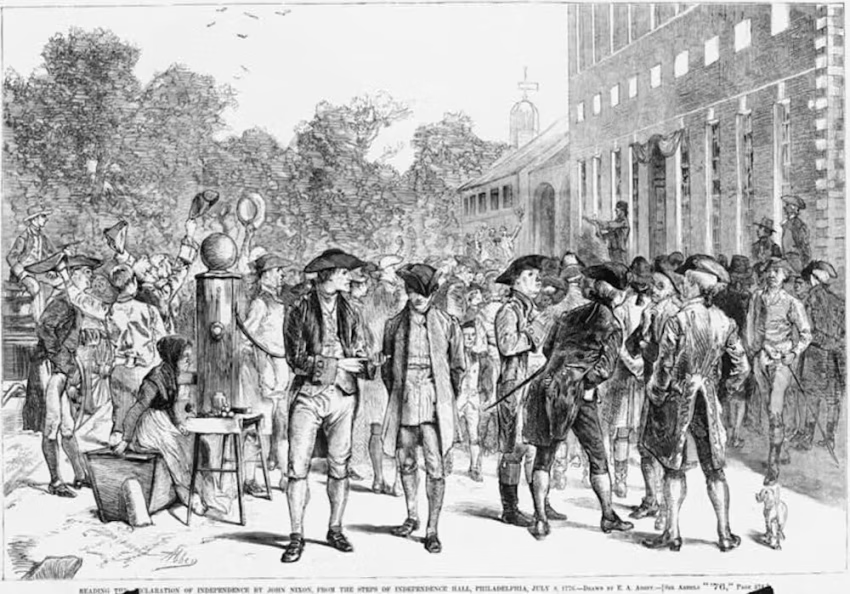
Public demonstrations made resistance visible. Town meetings, marches, and organized protests allowed colonists to express dissent openly and collectively.
Author: Anissa.wardell
Why Civic Education Matters More Than Ever at 250
As the United States approaches its 250th anniversary, one truth stands out with growing urgency: a constitutional republic cannot survive without civic education. The American system was never designed to function on autopilot. It depends on citizens who understand how their government works, why it was designed that way, and what responsibilities accompany their rights….
Who Were the Sons of Liberty?
The Sons of Liberty were a loosely organized group of colonists who played a major role in resisting British rule. Formed in response to the Stamp Act, they united individuals from different colonies around a shared cause. Members organized protests, distributed pamphlets, and encouraged boycotts of British goods. Their actions were often bold but strategic,…
Can a Free People Govern Themselves? The Question at the Heart of America
At the heart of the American founding lies a single, daring question: Can a free people govern themselves? In 1776, this was not a rhetorical exercise—it was a real and risky proposition. History offered few encouraging examples. Most nations were ruled by kings, emperors, or entrenched elites. The idea that ordinary citizens could sustain liberty…
What the American Experiment Asks of Us Now
The American experiment did not end with independence, nor was it completed with the ratification of the Constitution. From its beginning, the United States was understood as an ongoing project—an experiment in self-government that would require each generation to decide whether it was willing to sustain it. As America approaches its 250th anniversary, the central…
Why Rights and Responsibilities Cannot Be Separated
One of the most enduring lessons of the American founding is that rights and responsibilities are inseparable. From the very beginning, the architects of the American experiment understood that liberty could not survive on rights alone. Freedom, they believed, required citizens who were willing to accept responsibility for themselves, their communities, and the system of…
The Boston Tea Party Explained
The Boston Tea Party was one of the most famous acts of protest in American history, but it is often misunderstood as a reckless or violent event. In reality, it was a carefully planned and highly symbolic action meant to send a clear message about rights, governance, and the limits of government power. The colonists…
Why the Founders Feared Concentrated Power
One of the clearest themes running through America’s founding documents is a deep concern about concentrated power. The founders did not believe that tyranny arose only from bad people; they believed it often emerged from good intentions combined with unchecked authority. Their experience, their study of history, and their understanding of human nature convinced them…
Taxes, Tea, and Tensions
In the years leading up to the American Revolution, few issues angered the colonists more than the growing burden of British taxes. While the amounts themselves were often modest, the principle behind them struck at the heart of colonial identity. To many colonists, the real issue was not money—it was control. Laws were being imposed…
What Self-Government Really Requires From Citizens
Self-government was one of the most radical ideas to emerge from the American Revolution. In 1776, the founders declared that legitimate government derives its authority from the consent of the governed. That principle placed extraordinary trust in ordinary people. But it also carried an implicit warning: self-government can only endure if citizens are willing to…