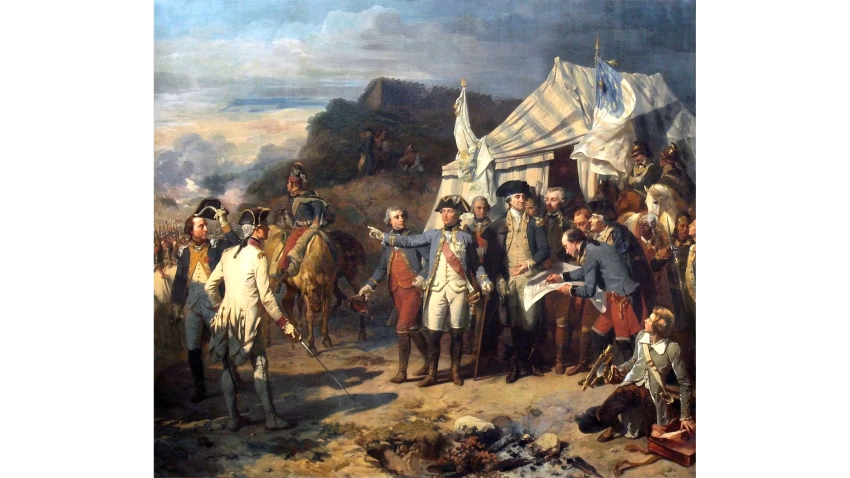
France paid close attention to the American Revolution because it touched nearly every major concern of the French state: power, rivalry, ideology, and opportunity. Diplomatic correspondence, memoirs, and government records from the 1770s show that French leaders viewed the conflict in America not as a distant colonial dispute, but as a chance to reshape the balance of power in Europe and the Atlantic world.
At the heart of France’s interest was its long rivalry with Britain. French diplomatic papers following the Seven Years’ War reveal lingering resentment over territorial and economic losses to Britain. The war had weakened French influence overseas and strengthened British dominance. When Britain’s North American colonies rebelled, French officials immediately recognized the strategic implications. Letters exchanged within the French foreign ministry describe the rebellion as a potential means to weaken Britain without direct confrontation—if handled carefully.
Yet France did not rush into open support. Correspondence from French diplomats in London and America shows caution. French leaders feared provoking another costly war before the colonies proved they could sustain resistance. Early reports emphasized uncertainty: the Americans had ideals, but did they have endurance? The Declaration of Independence in 1776 marked an important shift. It signaled seriousness of purpose and suggested the colonies were unlikely to reconcile with Britain.
Ideology also mattered. Many French intellectuals were influenced by Enlightenment thought, which emphasized natural rights, reason, and popular sovereignty. Letters and essays circulating in France praised American arguments about liberty and consent. While the French monarchy did not intend to embrace republicanism at home, officials understood the propaganda value of supporting a cause framed around universal principles. The American Revolution offered France moral leverage against Britain, portraying Britain as an oppressor rather than a defender of liberty.
Financial and commercial interests played a role as well. French merchants and officials saw potential for expanded trade if American independence succeeded. Commercial correspondence and port records show increasing interest in American markets, particularly in raw materials. Supporting the colonies promised long-term economic benefits if Britain’s monopoly was broken.
Secret assistance began before formal alliance. French records document covert shipments of arms, ammunition, and supplies sent to the colonies. These efforts were designed to test American strength without provoking immediate war. Diplomatic letters reveal that French leaders closely monitored American military performance, especially early battles, before committing fully.
The turning point came when American forces demonstrated resilience. French correspondence after key engagements reflects growing confidence that the colonies could endure. In 1778, France formally recognized the United States and signed treaties of alliance and commerce. These documents confirm that France’s attention had evolved into commitment—not out of idealism alone, but calculated interest.
France’s involvement reshaped the war. Naval support, financial aid, and military cooperation proved decisive. Yet French leaders never lost sight of their own goals: weakening Britain, restoring prestige, and advancing national interest.
Understanding why France paid attention to the American Revolution helps clarify an essential truth: independence was not won in isolation. It succeeded because American ideals intersected with European politics. France watched closely because the Revolution offered both inspiration and opportunity—and because global powers understood that what happened in America could alter the world order.