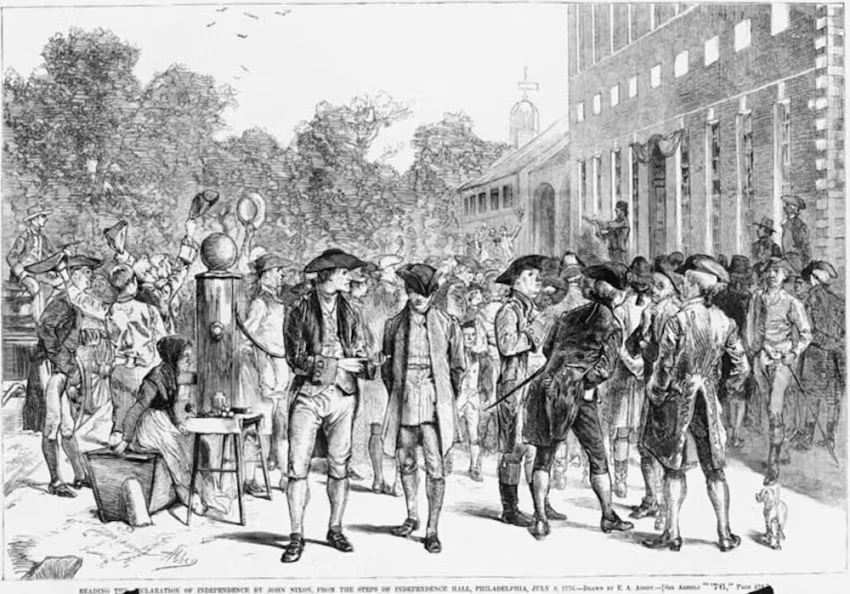
Colonial towns were the center of social, economic, and political life in 1776. Though small by modern standards, these towns were busy hubs where people gathered to trade goods, worship, share news, and debate ideas. For many colonists, town life shaped daily routines and personal identity, creating strong local connections that influenced how people thought about government and community.
Town centers were carefully organized to meet practical and civic needs. Most included a church or meeting house, a marketplace, and often a tavern or public inn. The church served not only as a place of worship but also as a gathering space for announcements and discussions. Marketplaces allowed farmers, craftsmen, and merchants to exchange goods, while taverns became informal meeting places where travelers shared news and opinions.
Town meetings played a particularly important role in colonial life. These gatherings allowed eligible citizens—usually property-owning men—to vote on local matters such as taxes, roads, schools, and defense. While participation was limited, town meetings encouraged habits of debate, compromise, and self-government long before independence was declared. Colonists grew accustomed to solving problems locally rather than relying on distant authorities.
Daily life in colonial towns required cooperation. Neighbors depended on one another for trade, labor, and mutual support. If a family faced illness, fire, or poor harvests, others often stepped in to help. Apprenticeships and family businesses were common, reinforcing interdependence across generations. This close-knit structure strengthened trust and resilience, qualities that proved vital during periods of political uncertainty.
Colonial towns also served as centers for spreading information. Newspapers, pamphlets, and word-of-mouth carried news from other colonies and from Britain. As tensions with British rule increased, towns became places where frustration turned into organized action. Protests, boycotts, and meetings were often planned locally before spreading outward.
Understanding colonial town life helps explain how unity formed among people who lived far apart. These communities fostered shared values, cooperation, and political awareness. The habits learned in colonial towns—participation, debate, and mutual responsibility—helped shape the spirit that made independence possible.